Many parents may think:
“Opening bottle caps, twisting nuts and bolts, pulling zippers—what’s the point? Wouldn’t it be better to practise writing and reading instead?”
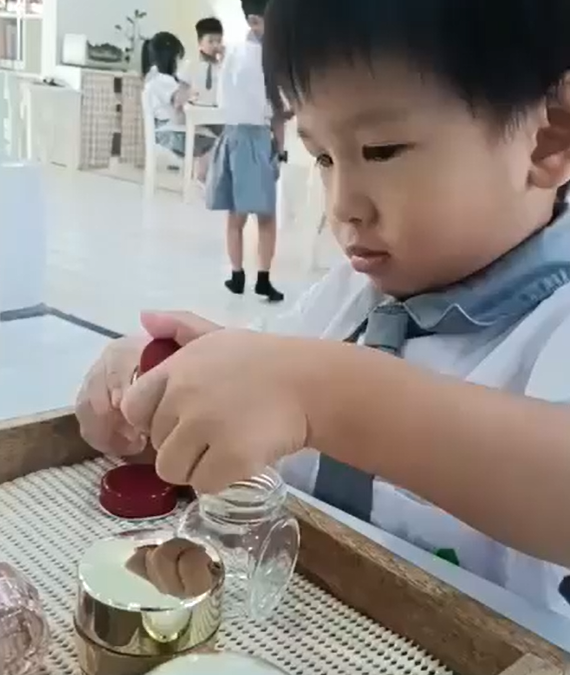
But the truth is: writing doesn’t start with a pencil — it starts with the hands.
When a child’s fingers lack strength and control, they often grip the pencil too tightly, get tired quickly, write unevenly, and may even begin to resist writing altogether.
What are these “basic skills” really building?
These activities aren’t training one simple movement — they develop three core abilities:
• Strength: stronger fingers, a more relaxed pencil grip
• Coordination: both hands working together, eye–hand coordination
• Control: movements become slower, steadier, and more rhythmic
Just like building a house requires a solid foundation, writing requires a strong hand foundation first.
With these basics in place, children are more likely to show these changes:
✅ They move into writing more smoothly (a more natural grip)
✅ They feel less frustration (less “I can’t do it”)
✅ They become more independent (dressing themselves, opening lunch boxes, organising their bags)
✅ They develop steadier focus (more willing to sit and complete a task)
How can parents see real progress?
Don’t focus on how “pretty” the end product looks. Look at the child:
• Can they do it independently?
• Do they repeat it willingly?
• Are their movements becoming steadier and more controlled?
• Do they feel a sense of achievement after finishing?
When parents see a child becoming “more and more steady,” they’ll understand — this isn’t just play. It’s growth.
When the basics are built well, learning later becomes much smoother.
A child who starts writing earlier isn’t always ahead — the child with steady hands and a settled mind will go further.
Sophie sharing with you to understand education |
Build the child from within 🌱
这些不是在玩小东西,是在练孩子未来生活和学习的“底盘”。
很多家长会觉得:
“开瓶盖、拧螺丝、拉拉链——这有什么用?不如写字、认字。”
其实写字不是先从笔开始的,是先从手开始的。手指没力量、控制不稳,孩子握笔就会紧、累、写歪,甚至开始抗拒写字。
2)“基础功”到底在练什么?
这些活动在练的不是一个动作,而是三种能力:
• 力量:手指有力,握笔不紧张
• 协调:两只手配合,眼手一致
• 控制:动作能慢下来、稳下来、有节奏
就像盖房子要先打地基,写字要先练手的地基。
有了这些基础,孩子们
✅ 更快进入书写(握笔更自然)
✅ 更少挫败感(不容易“我不会”)
✅ 更强自理能力(自己穿衣、开饭盒、整理书包)
✅ 专注力更稳(孩子愿意坐下来做事)
4)给家长一个很具体的评估方式,让家长“看见进步”
不是看作品多漂亮,而是看孩子:
• 能不能独立完成?
• 会不会反复做?
• 动作是不是越来越稳?
• 做完会不会有成就感?
当家长看到“越来越稳”,就会相信这不是玩。
基础功做扎实,孩子后面的学业会更顺。急着写字的孩子不一定领先,手稳心定的孩子走得更远。
Sophie 带你看教育|从内在启发,陪孩子成长 🌱