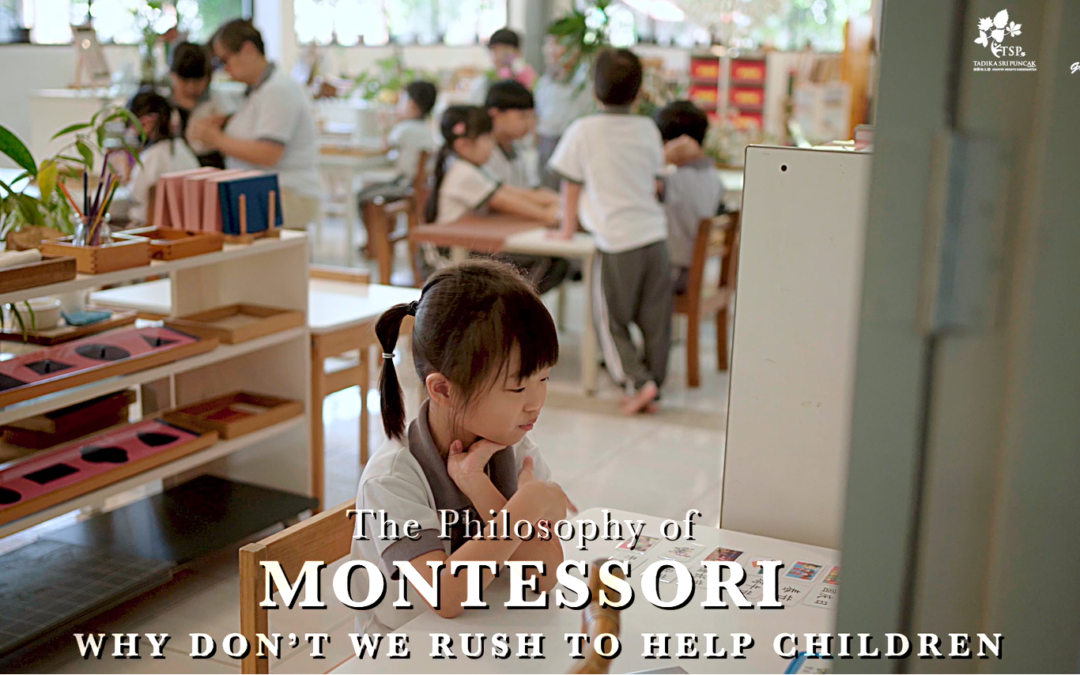
In a Montessori classroom, teachers do not rush to help every struggling child. This is not indifference, but respect for the child’s natural learning process.
When children are given time to experiment, explore, and adapt, they develop concentration, problem-solving skills, and genuine understanding. Every child learns at a different pace, and growth cannot be forced.
The role of the teacher is to observe patiently and offer support at the right moment. With trust, time, and gentle guidance, children discover their own abilities—building confidence, independence, and the quiet realization that they are capable of more. Childhood, after all, is not a race.
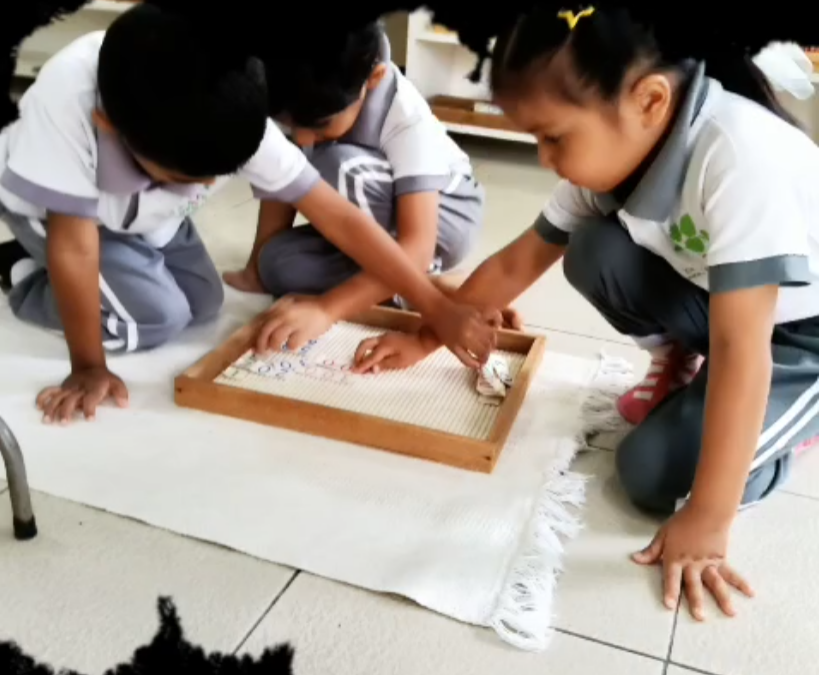
In our classroom, math isn’t just numbers on paper — it’s hands-on, shared, and joyful!
Through group operations like the Bank Game, children work together to build big numbers using golden beads. They learn place value, teamwork, and confidence.
“What the hand does, the mind remembers.” – Maria Montessori
These small group activities help children truly understand math in a meaningful, lasting way — and they love it!
In the past, children were expected to memorize multiplication tables before they truly understood what they meant.
Today, through the Montessori approach, children use hands-on materials like rods of different lengths to explore and compare quantities. By working with these tools, they naturally discover mathematical relationships. This way, learning begins with real experience and gradually leads to deeper understanding—making math both meaningful and enjoyable.




 Reading vs. Comprehension