The Philosophy of Montessori Mathematics focuses on guiding children from concrete experiences to abstract understanding. Through carefully designed materials and a structured sequence, children explore numbers, quantities, and relationships in a meaningful way. This philosophy respects each child’s learning pace, encourages self-correction, and builds logical thinking, concentration, and confidence, allowing mathematics to be understood deeply rather than memorised.
Website : https://www.tsp.edu.my/ Facebook : https://www.facebook.com/tadikasripuncakcountryheight Instagram : https://www.instagram.com/tadikasripuncak?igsh=MTQ1NGRxNTUyanA1bw== Tik Tok : https://www.tiktok.com/@tadikasripuncak633?_r=1… You Tube : https://youtube.com/@tsp_633 Xiaohongshu : https://xhslink.com/m/9VD4Fnt164b
The Montessori language philosophy focuses on nurturing a child’s natural ability to communicate through hands-on, meaningful experiences. Children are introduced to rich vocabulary, phonetic awareness, and expressive language in a calm, prepared environment. Through materials like sandpaper letters, movable alphabets, and storytelling, they develop reading, writing, and speaking skills at their own pace. This approach builds confidence, independence, and a genuine love for language, forming a strong foundation for lifelong learning. #tadikasripuncak#preschool#earlychildhoodeducation#educationinmalaysia#Sophielee#kajang#sungailong#tsp_blog#fypageシ#tsp
Children go through different stages as they develop self-discipline and the ability to follow guidance. From early responsiveness to growing awareness and eventually true obedience, each stage reflects their emotional and cognitive growth. By understanding these stages, adults can respond with patience and support, helping children build respect, independence, and inner discipline naturally over time.
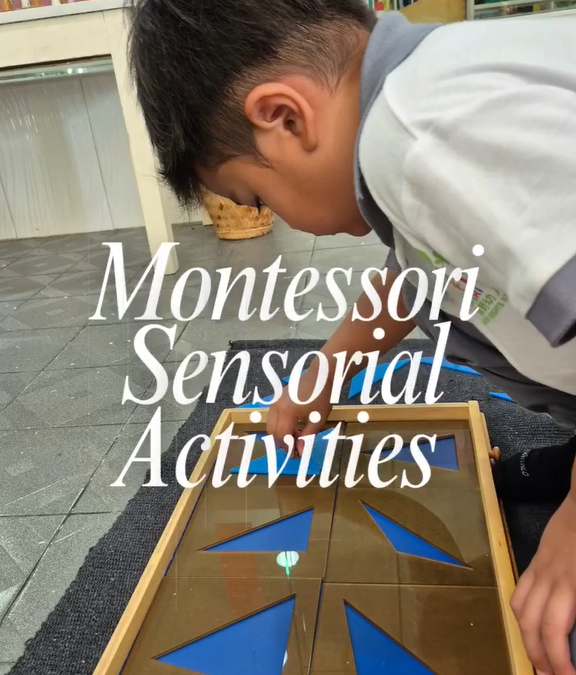
Ever wonder why Montessori classrooms are filled with beautiful wooden towers, smelling jars, and fabric swatches? It’s not just for aesthetics—it’s brain building in action.
In the Montessori world, we call the child a “sensorial explorer.” Between the ages of 3 and 6, children are in a sensitive period for refining their senses. They aren’t just looking at the world; they are categorizing it.
What’s Happening Behind the Scenes? The Pink Tower: It’s more than stacking blocks. It’s a physical lesson in dimensionality and volume. The Color Tablets: We’re moving beyond “red” and “blue” to discern the tiniest gradients of shade, sharpening visual discrimination.
The Mystery Bag: By feeling objects without looking, children develop stereognostic sense—the ability to recognize an object using only tactile information.
The Goal? To give the child a “key to the universe.” By isolating qualities like weight, texture, sound, and scent, we help them organize the thousands of stimuli they encounter every day. When a child masters a sensorial work, they aren’t just “playing”—they are developing the mathematical mind and the focus required for a lifetime of learning.
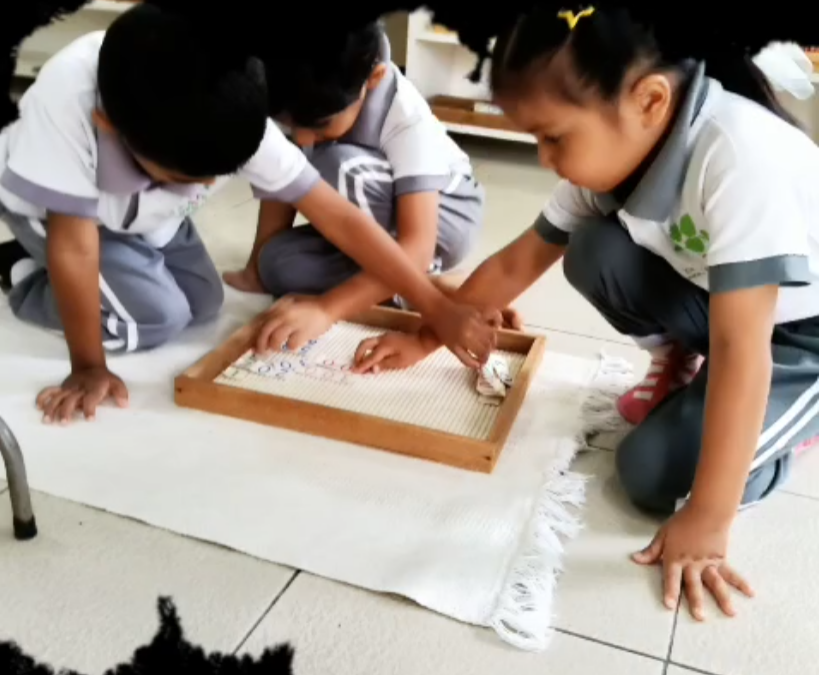
In our classroom, math isn’t just numbers on paper — it’s hands-on, shared, and joyful!
Through group operations like the Bank Game, children work together to build big numbers using golden beads. They learn place value, teamwork, and confidence.
“What the hand does, the mind remembers.” – Maria Montessori
These small group activities help children truly understand math in a meaningful, lasting way — and they love it!

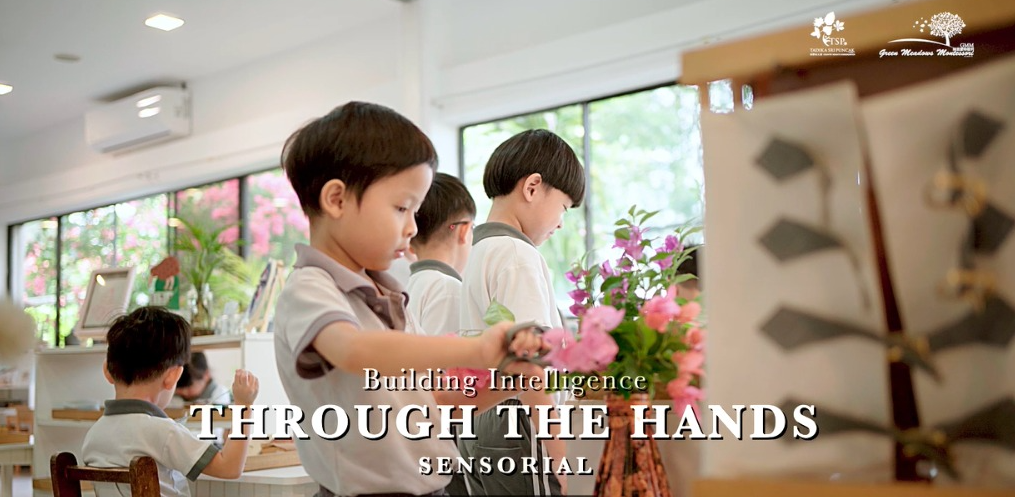
 小手大发现
小手大发现