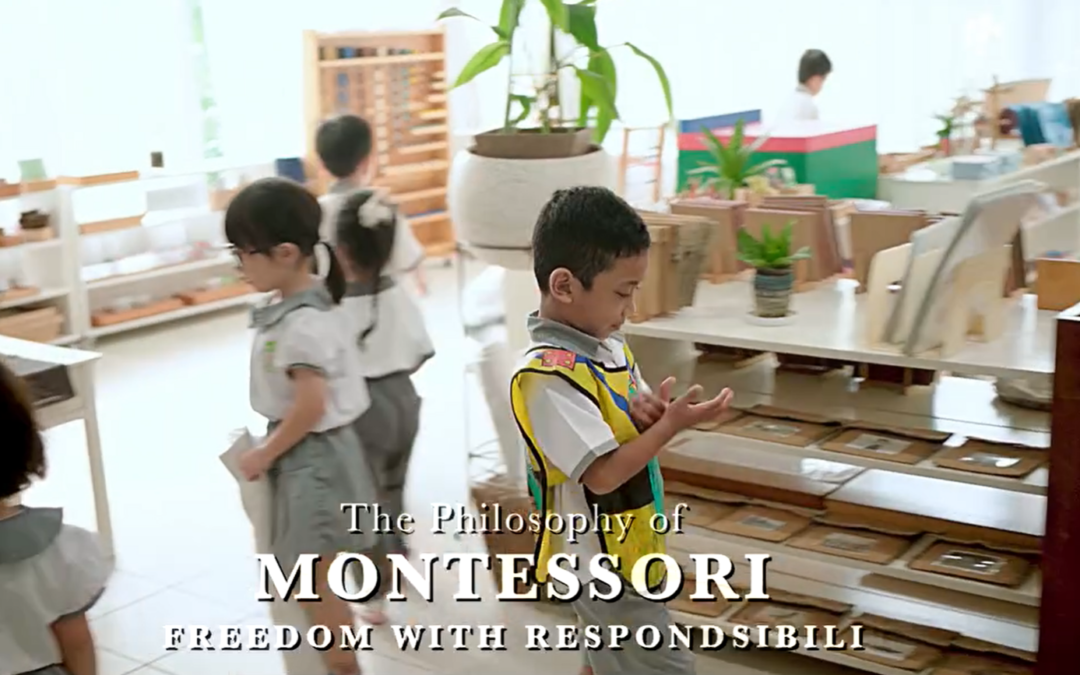
In a Montessori environment, freedom is never given without purpose. Within clear boundaries, children are offered meaningful choices so they can explore, decide, and act with intention. Through real responsibilities—caring for materials, respecting others, and managing their own work—children gradually develop self-discipline and accountability. This balance of freedom and structure supports emotional regulation, independence, and confidence. When children are trusted with responsibility at the right developmental stage, they learn not because they are told to, but because they are internally motivated to grow and contribute.
Want to see how this actually happens—up close? You’re warmly invited to join our 1-hour Open Experience Session with your child. You’ll see how children work within “freedom with boundaries”: choosing their own activities, focusing deeply, and returning materials to their place. You’ll also observe how teachers guide with minimal instruction—helping children build order, responsibility, and self-management. For many parents, this one hour becomes the moment they truly understand: self-discipline and confidence can be gently nurtured through the right environment.
Book your 1-hour experience slot now—come and see it with your own eyes.
If you’d like to learn more about Montessori parenting, follow me 🌱 Sophie—Guiding You to Understand Education.
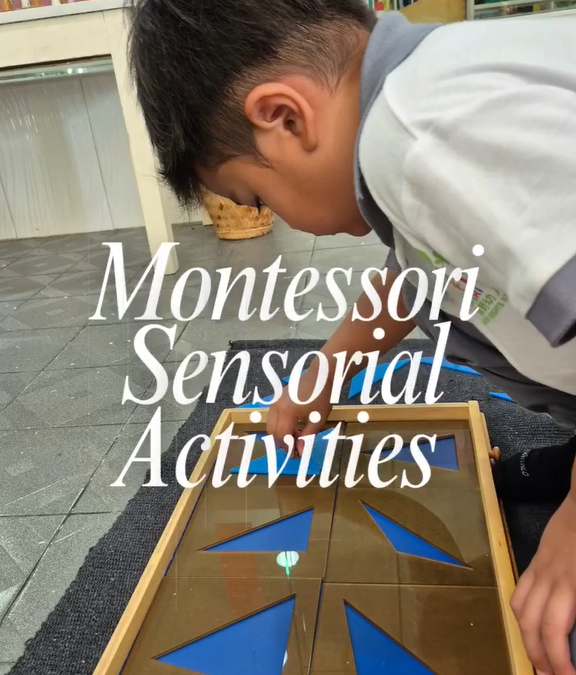
Ever wonder why Montessori classrooms are filled with beautiful wooden towers, smelling jars, and fabric swatches? It’s not just for aesthetics—it’s brain building in action.
In the Montessori world, we call the child a “sensorial explorer.” Between the ages of 3 and 6, children are in a sensitive period for refining their senses. They aren’t just looking at the world; they are categorizing it.
What’s Happening Behind the Scenes? The Pink Tower: It’s more than stacking blocks. It’s a physical lesson in dimensionality and volume. The Color Tablets: We’re moving beyond “red” and “blue” to discern the tiniest gradients of shade, sharpening visual discrimination.
The Mystery Bag: By feeling objects without looking, children develop stereognostic sense—the ability to recognize an object using only tactile information.
The Goal? To give the child a “key to the universe.” By isolating qualities like weight, texture, sound, and scent, we help them organize the thousands of stimuli they encounter every day. When a child masters a sensorial work, they aren’t just “playing”—they are developing the mathematical mind and the focus required for a lifetime of learning.
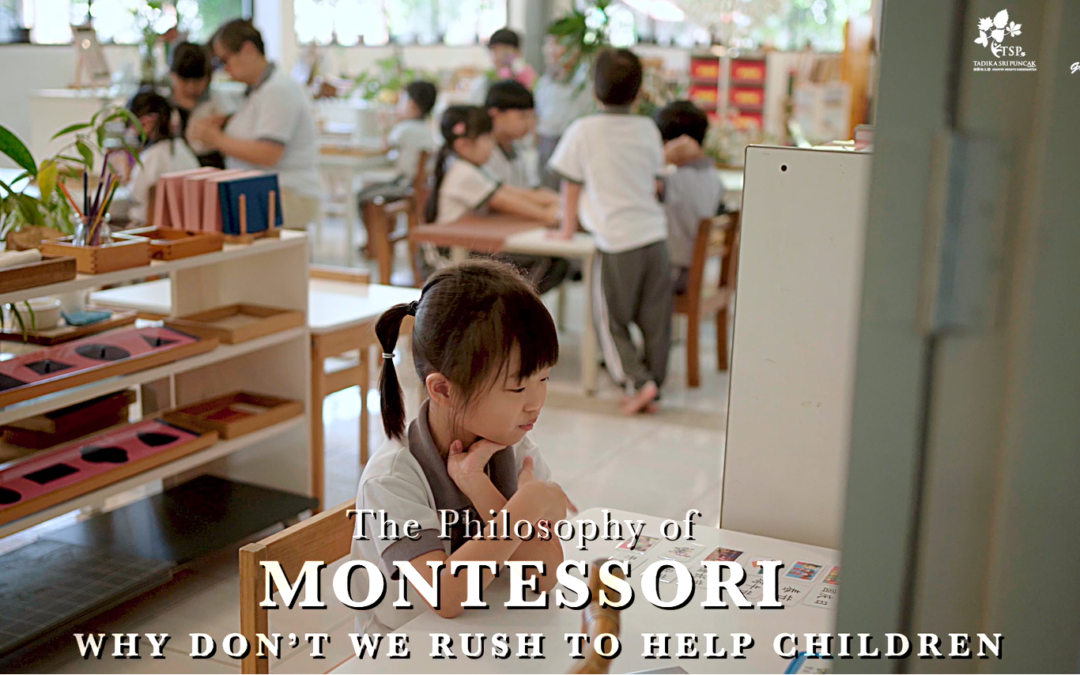
In a Montessori classroom, teachers do not rush to help every struggling child. This is not indifference, but respect for the child’s natural learning process.
When children are given time to experiment, explore, and adapt, they develop concentration, problem-solving skills, and genuine understanding. Every child learns at a different pace, and growth cannot be forced.
The role of the teacher is to observe patiently and offer support at the right moment. With trust, time, and gentle guidance, children discover their own abilities—building confidence, independence, and the quiet realization that they are capable of more. Childhood, after all, is not a race.
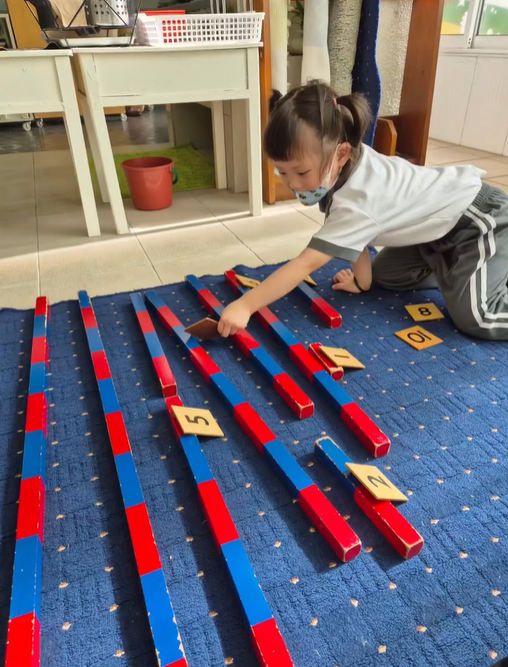
“At four years old, the children began composing numbers up to a thousand. As they continued to grow, their progress was truly remarkable—by the age of six, many were confidently performing all four operations with numbers up to the millions. Their journey reflects not only academic achievement but also a deep, joyful engagement with learning.”
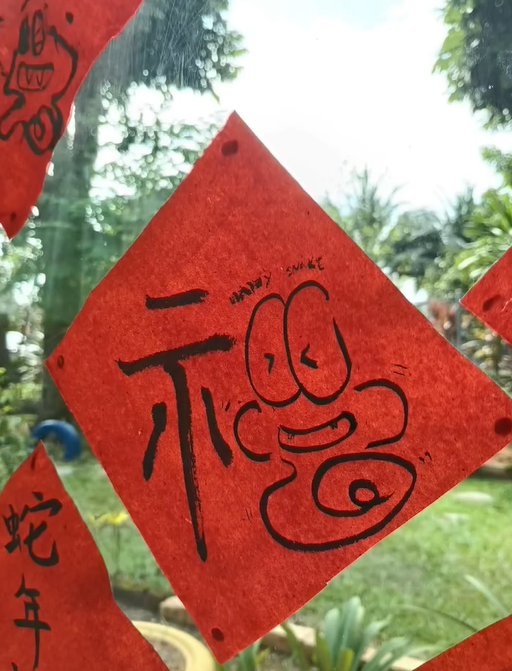
With Chinese New Year approaching, the spirit of tradition comes alive in every thoughtful preparation. Young hands carefully practice the graceful strokes of calligraphy, pouring their hearts into symbols of luck, prosperity, and good fortune. In the kitchen, vibrant butterfly pea flowers transform into rich hues of blue and purple, adding warmth and colour to handmade tang yuan—a dessert that sweetens the bonds of love and unity. Delicate red paper cuttings take shape, with each intricate design carrying whispers of wishes for happiness, abundance, and peace.
This season is more than a celebration; it’s a time to honour the beauty of heritage, the joy of togetherness, and the hope for a bright, blessed year ahead. Here’s to preserving traditions and embracing the new year with love, creativity, and gratitude.
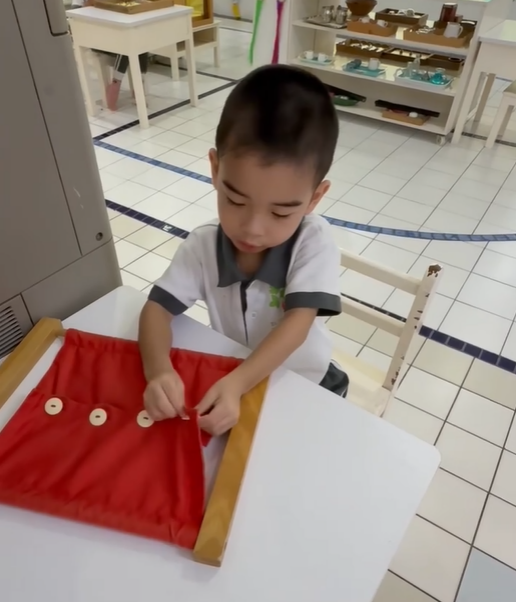
Children are born with a natural desire to help themselves, and in a Montessori environment, we nurture this instinct by providing appropriate materials, space, and time
Whether washing hands, serving their snacks or buttoning their shirts, every daily task becomes an opportunity for children to develop independence and confidence.
By mastering these activities, they build self-assurance, recognize their capabilities, and take their first steps toward an independent life.
Why choose Montessori?
In a Montessori environment, children gain knowledge and learn independence, confidence, and focus. Through hands-on exploration, practical activities, and collaborative learning, they grow into lifelong learners and capable citizens ready for the future.
Give your child a chance to unlock their potential and brighten their future—start with Montessori!



 Children are born with a natural desire to help themselves, and in a Montessori environment, we nurture this instinct by providing appropriate materials, space, and
 Why choose Montessori?