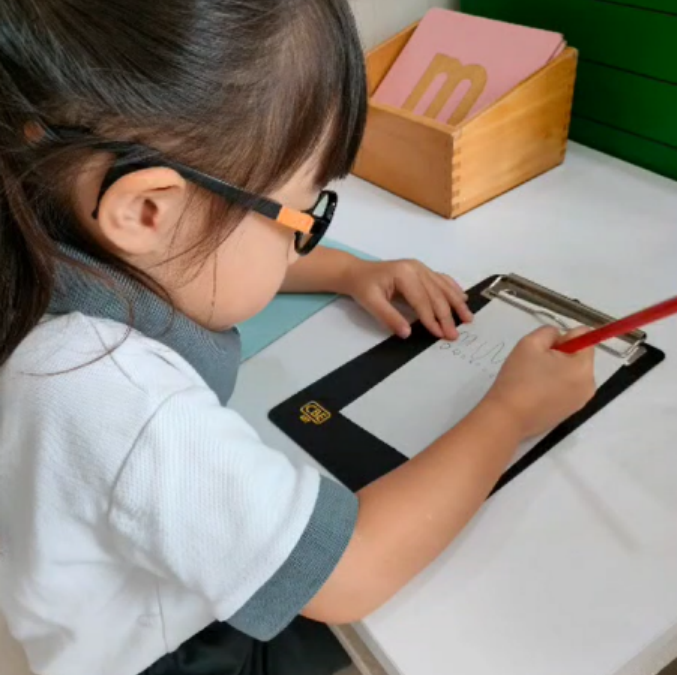
In the Montessori classroom, children explore language through movement, touch, and meaningful use. They handle letters, build words, and begin to write naturally—connecting their inner thoughts with the outer world. By doing so, they are not only learning a skill, they are participating in one of humanity’s most important traditions: the sharing of ideas through written symbols.
Children’s language development begins long before they enter the classroom. Dr. Maria Montessori emphasized that from birth to age six, children experience the Absorbent Mind phase, during which they naturally acquire language by engaging with those around them. Montessori classrooms intentionally integrate both spoken and written language into the environment, providing rich opportunities to support and enhance this critical stage of linguistic development.
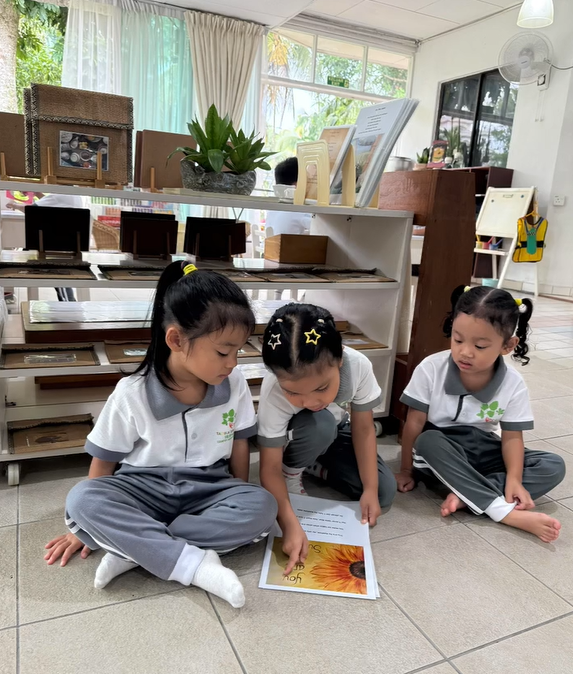
Within this environment, children actively engage in language learning through interaction and exploration. They enjoy expressing themselves in conversations with teachers and peers while developing a love for language through books, word games, and writing activities. This immersive experience not only strengthens their language skills but also nurtures their curiosity, confidence, and enthusiasm for communication.
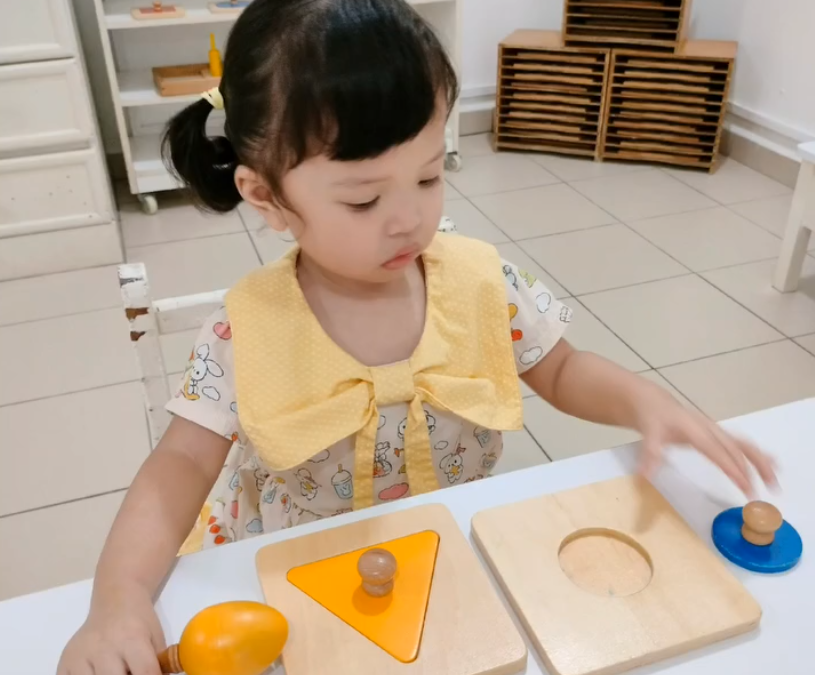
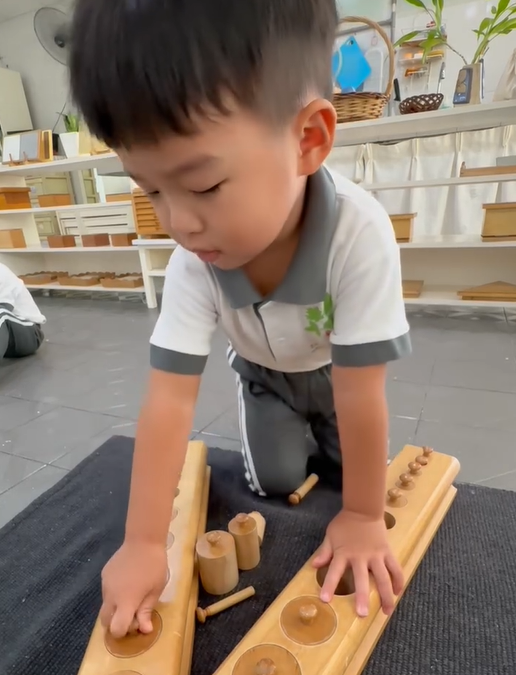
In a Montessori classroom, the materials are designed with a built-in “control of error” that helps children recognize and correct their own mistakes.
For example, if a child is working with cylinders, they’ll immediately notice if the wrong one doesn’t fit into a hole, prompting them to try again without needing an adult to step in. This encourages independence, problem-solving, and confidence.
The teacher’s role is to observe, guide, and create a supportive environment rather than direct the child’s learning. The teacher steps in only when necessary, offering gentle hints or asking questions to help the child figure things out themselves. This helps children learn not just academic skills, but also resilience, as they see mistakes as a natural part of the learning process.
Montessori Toddler programs bring everyday moments to life, turning simple activities into powerful learning experiences! From tidying up and dressing themselves to setting the table, children gain independence, confidence, and essential life skills. These hands-on activities not only nurture their organization and focus but also support their social, physical, and mental growth. Watch your little one thrive as they explore, learn, and grow at their own pace—one joyful discovery at a time!
 Reading vs. Comprehension


 The teacher steps in only when necessary, offering gentle hints or asking questions to help the child figure things out themselves.
  This helps children learn not just academic skills, but also resilience, as they see mistakes as a natural part of the learning process.