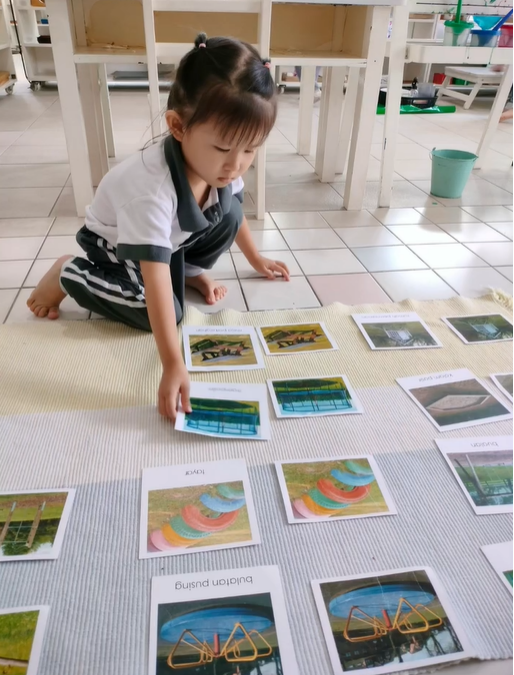
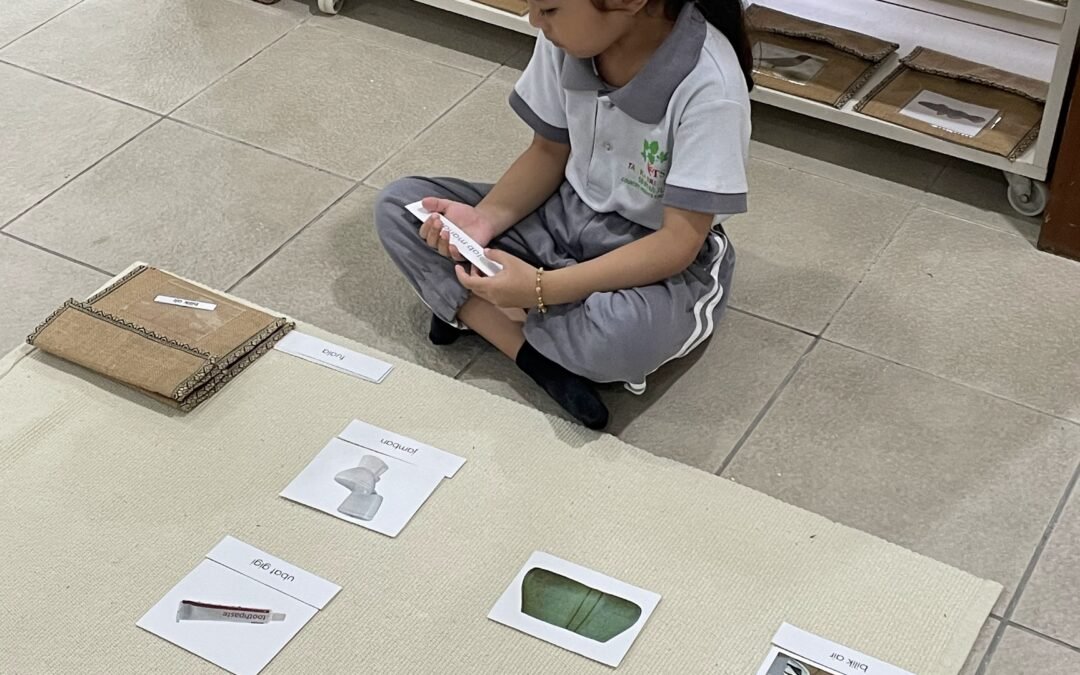
Classified cards play a big role in a Montessori classroom. It is the first language material offered to the child. This material not only helps a young child enrich his/her language but also helps the child form a logical mind in categorisation. Eventually, these cards also assist the child in reading and knowing the spelling.
In Montessori, every picture is more than just an image it’s a gateway to understanding, curiosity, and wonder.
These classified cards are not just tools; they are stepping stones that help little minds connect with the beauty and diversity of the world around them.
Each matching moment is a triumph, each discovery a spark of joy.
Here, learning is not just about knowledge it’s about nurturing confidence, independence, and a lifelong love for exploration.
n her 1949 lecture in London, Dr.Maria Montessori emphasized the vital role of imagination in a child’s development of intelligence. She argued that intelligence is not merely a matter of acquiring facts or information but is deeply connected to a child’s ability to engage with the world through creativity, curiosity, and active exploration.
According to Montessori, imagination allows children to go beyond the concrete reality they experience and begin constructing mental models, which are essential for problem-solving and abstract thinking.
Montessori highlighted that the child’s mind is naturally inclined to construct knowledge from experiences, and this process is often driven by the child’s imagination. By engaging with materials, objects, and social situations, children learn to conceptualize abstract ideas and make sense of the world.
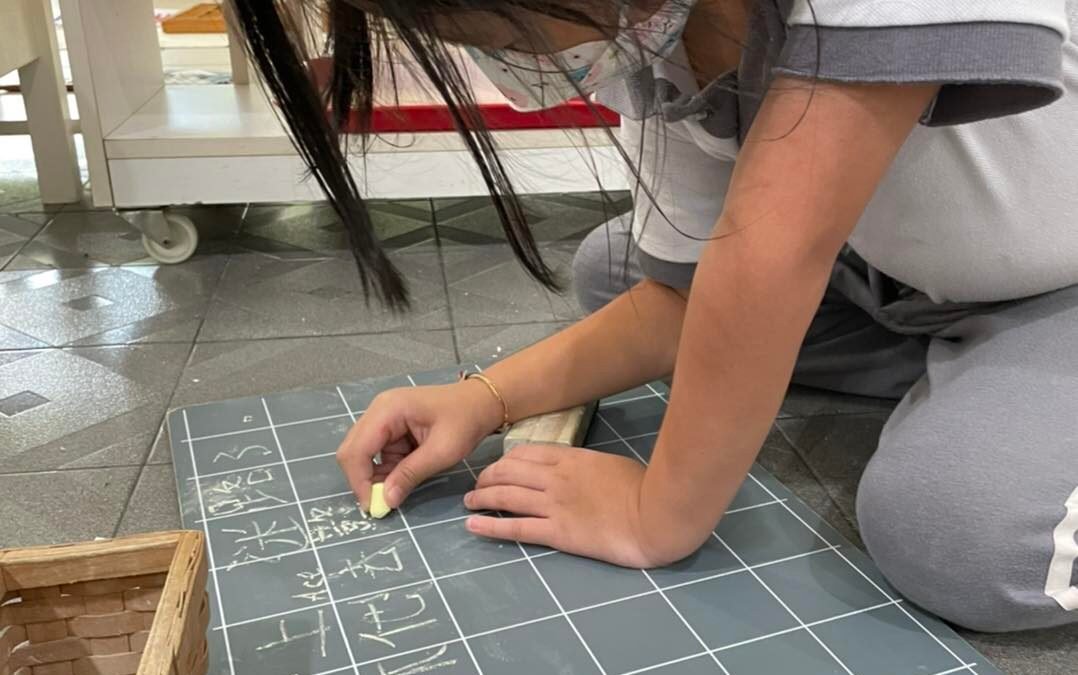
Today, this little girl was jotting down her thoughts with the movable alphabet. When she reached the word “buy,” it reminded her of “bye.” She explained to me the difference between “buy” and “bye” with a chuckle. Then, she paused a while and came back to me with “night” and “knight.” This little girl just discovered homophones on her own.
It is moments like this that we cherish deeply in our school. The joy and satisfaction in discovery. That spark in her eyes…
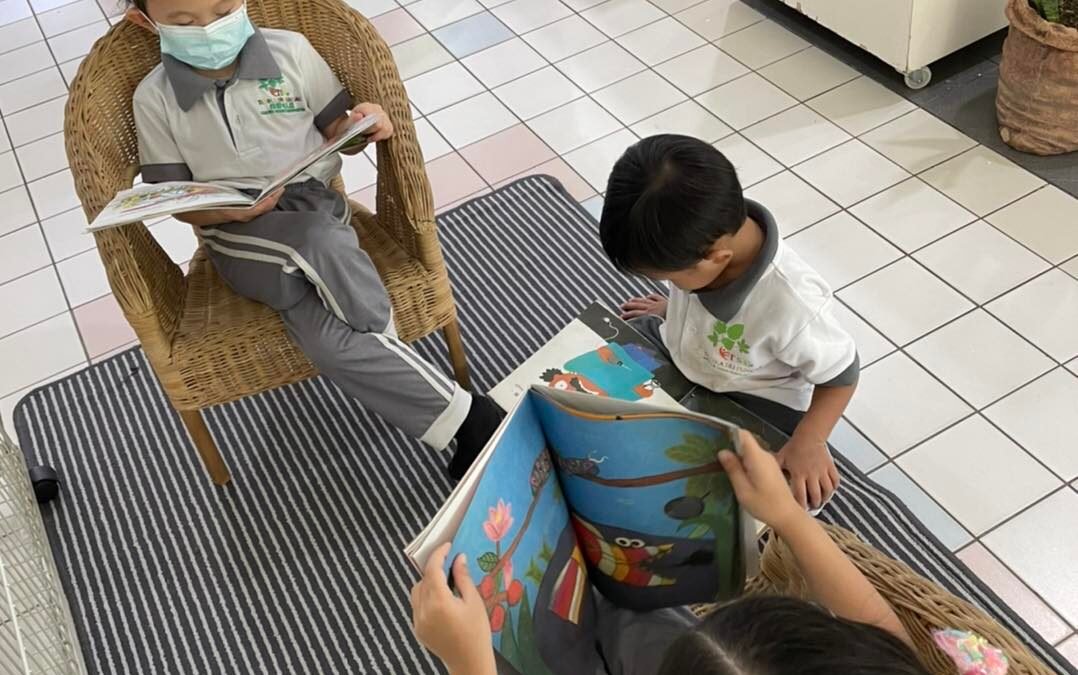
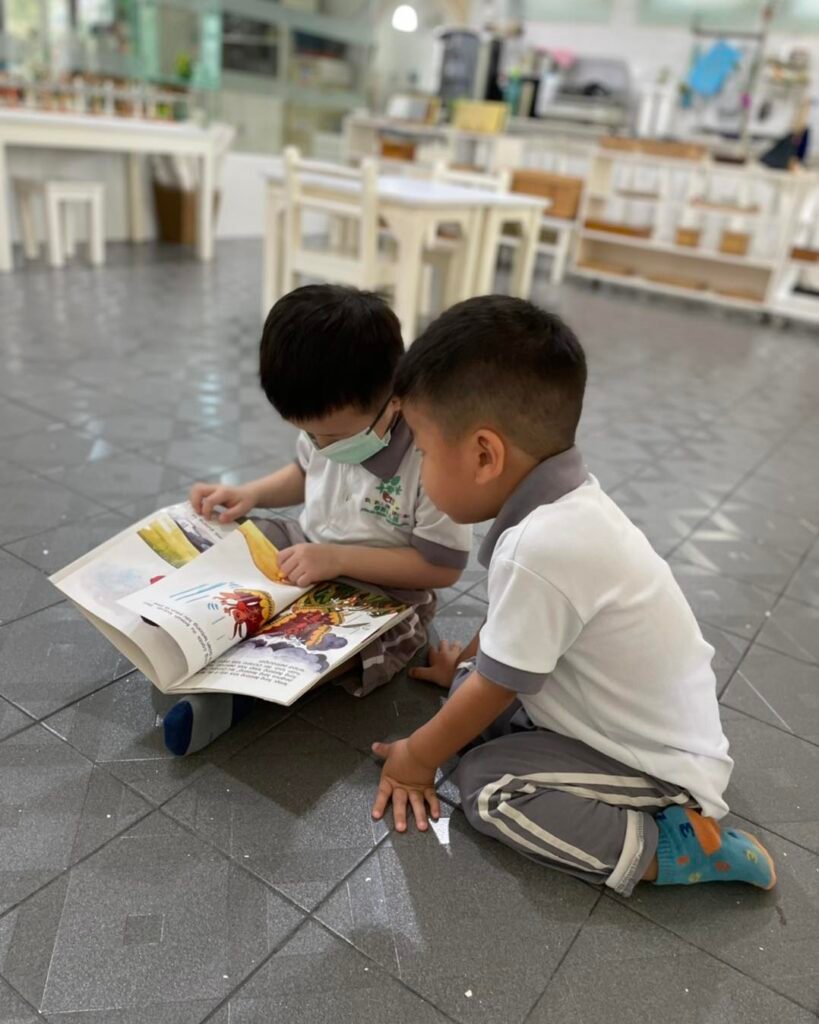
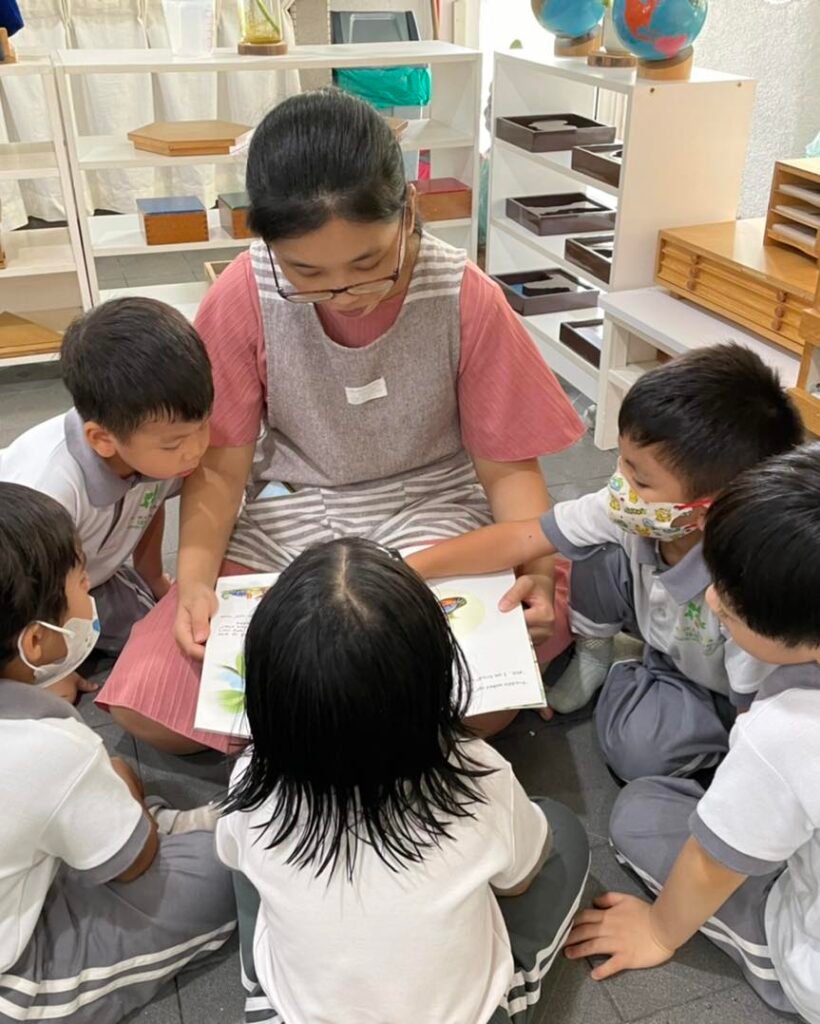
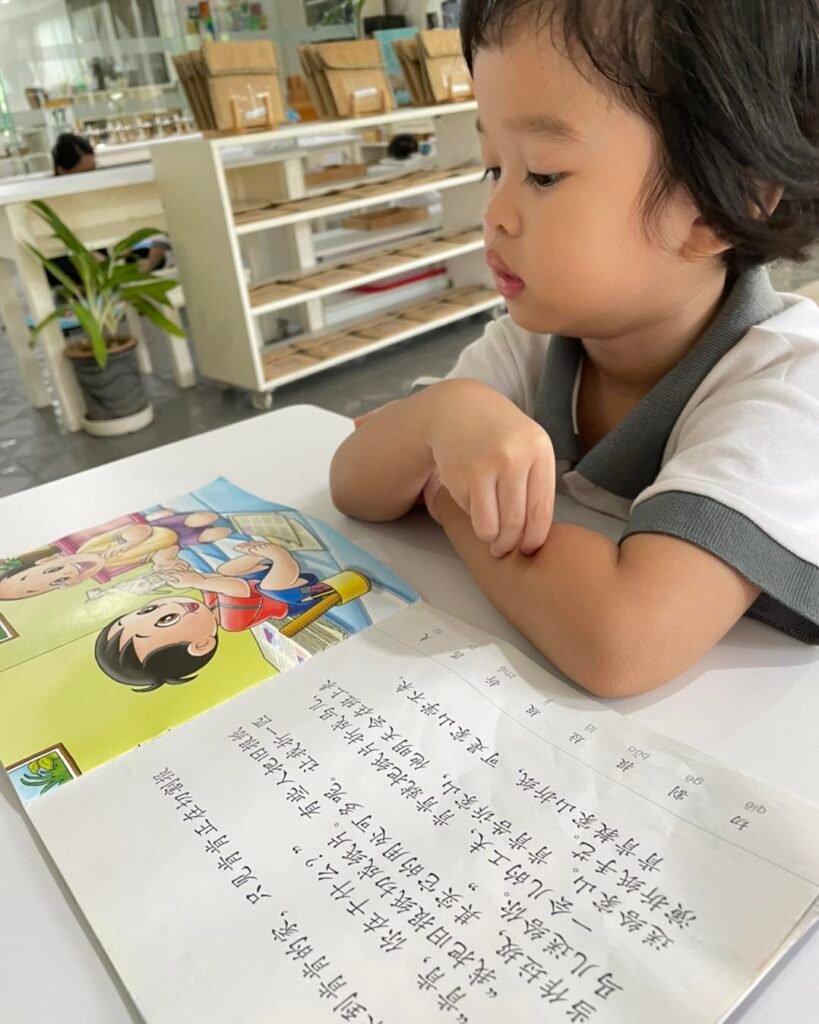
Reading goes beyond pointing the text to read out loud, it’s a calming and pleasant journey to know what a book is delivering through text and illustrations.