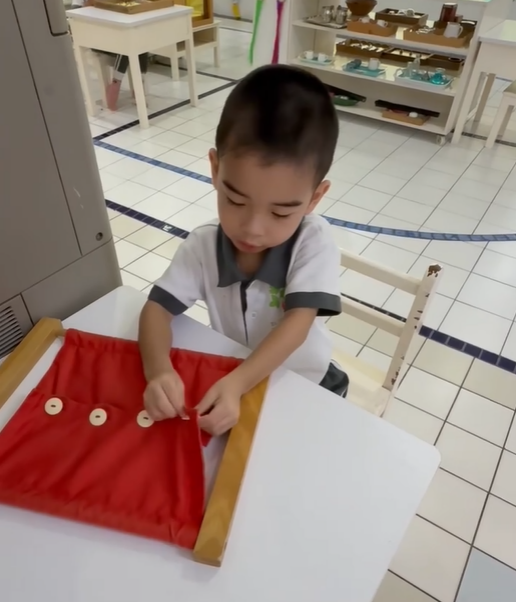
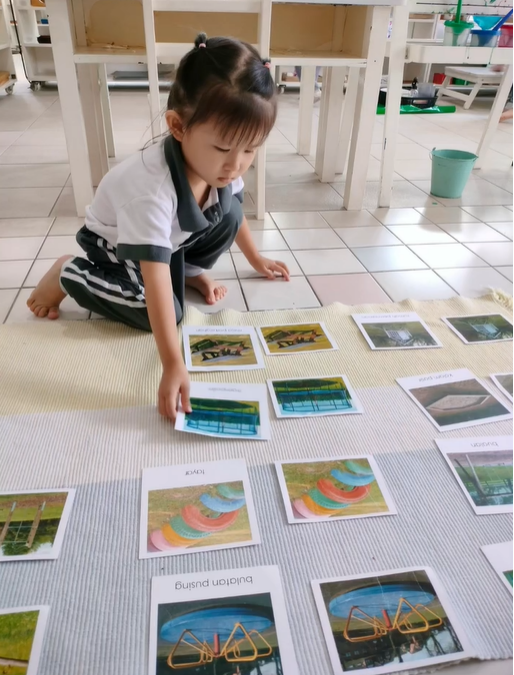
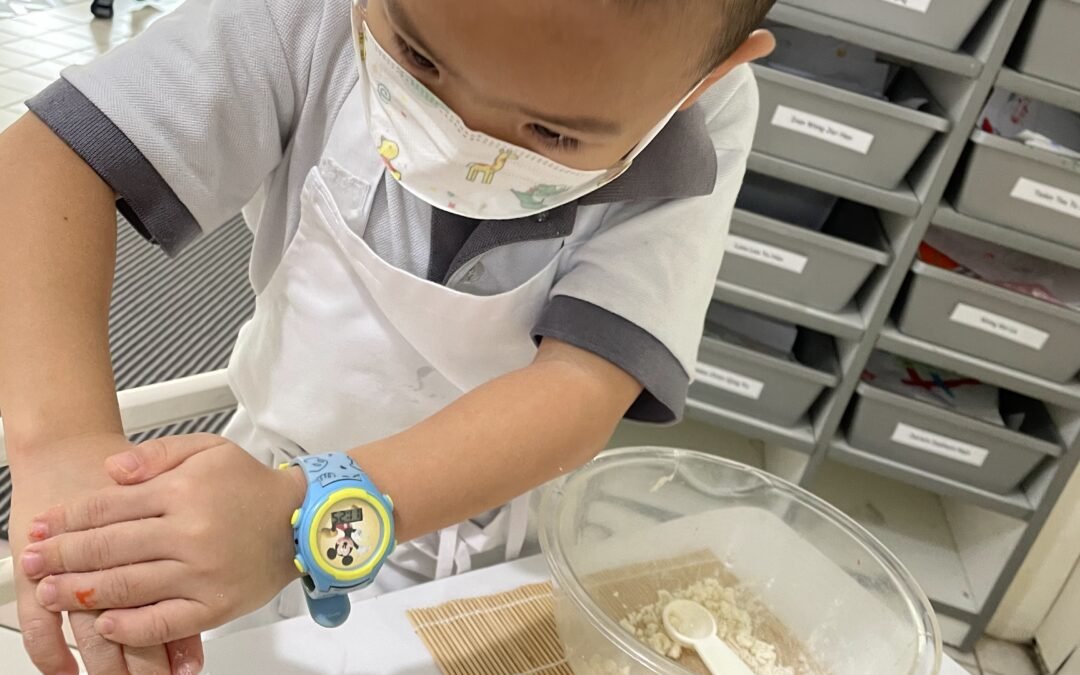
Ever wonder why Montessori classrooms are filled with beautiful wooden towers, smelling jars, and fabric swatches? It’s not just for aesthetics—it’s brain building in action.
In the Montessori world, we call the child a “sensorial explorer.” Between the ages of 3 and 6, children are in a sensitive period for refining their senses. They aren’t just looking at the world; they are categorizing it.
What’s Happening Behind the Scenes? The Pink Tower: It’s more than stacking blocks. It’s a physical lesson in dimensionality and volume. The Color Tablets: We’re moving beyond “red” and “blue” to discern the tiniest gradients of shade, sharpening visual discrimination.
The Mystery Bag: By feeling objects without looking, children develop stereognostic sense—the ability to recognize an object using only tactile information.
The Goal? To give the child a “key to the universe.” By isolating qualities like weight, texture, sound, and scent, we help them organize the thousands of stimuli they encounter every day. When a child masters a sensorial work, they aren’t just “playing”—they are developing the mathematical mind and the focus required for a lifetime of learning.
Our Chinese New Year Open House was a beautiful celebration filled with vibrant traditions, joyful moments, and meaningful cultural experiences.
The lively lion dance brought blessings of strength, courage, and good fortune, filling the space with positive energy and excitement .
The giving of angpows symbolised good wishes, prosperity, and new beginnings, bringing smiles and happiness to young and old alike .
Through food sharing, we embraced the true spirit of the festival unity, gratitude, and the joy of coming together as one community .
Every moment reflected the richness of cultural heritage, reminding us of the importance of respect, harmony, and togetherness.
This celebration was not just about festivities, but about passing down traditions, creating lasting memories, and strengthening bonds among families and friends .
May this Lunar New Year bring abundance, happiness, good health, and prosperity to everyone.
In a Montessori classroom, teachers do not rush to help every struggling child. This is not indifference, but respect for the child’s natural learning process.
When children are given time to experiment, explore, and adapt, they develop concentration, problem-solving skills, and genuine understanding. Every child learns at a different pace, and growth cannot be forced.
The role of the teacher is to observe patiently and offer support at the right moment. With trust, time, and gentle guidance, children discover their own abilities—building confidence, independence, and the quiet realization that they are capable of more. Childhood, after all, is not a race.
In the early stages of Montessori mathematics, children work with physical objects that represent mathematical concepts. These materials are designed to engage the child’s senses and allow them to explore math in a tangible, interactive way.
Through concrete materials, children experience mathematical concepts in a real-world, hands-on way, which helps solidify their understanding.
After the child becomes familiar with the concrete materials, they move to semi-concrete representations. This is the stage where children begin using symbols or pictures to represent the concrete materials they worked with earlier.
Once the child has a deep, intuitive understanding of mathematical concepts through concrete and semi-concrete experiences, they are ready to understand the abstract symbols and operations used in formal mathematics.
This progression from concrete to abstract ensures that children build a solid foundation of understanding before moving to more complex, symbolic math.
Children’s language development begins long before they enter the classroom. Dr. Maria Montessori emphasized that from birth to age six, children experience the Absorbent Mind phase, during which they naturally acquire language by engaging with those around them. Montessori classrooms intentionally integrate both spoken and written language into the environment, providing rich opportunities to support and enhance this critical stage of linguistic development.
Within this environment, children actively engage in language learning through interaction and exploration. They enjoy expressing themselves in conversations with teachers and peers while developing a love for language through books, word games, and writing activities. This immersive experience not only strengthens their language skills but also nurtures their curiosity, confidence, and enthusiasm for communication.